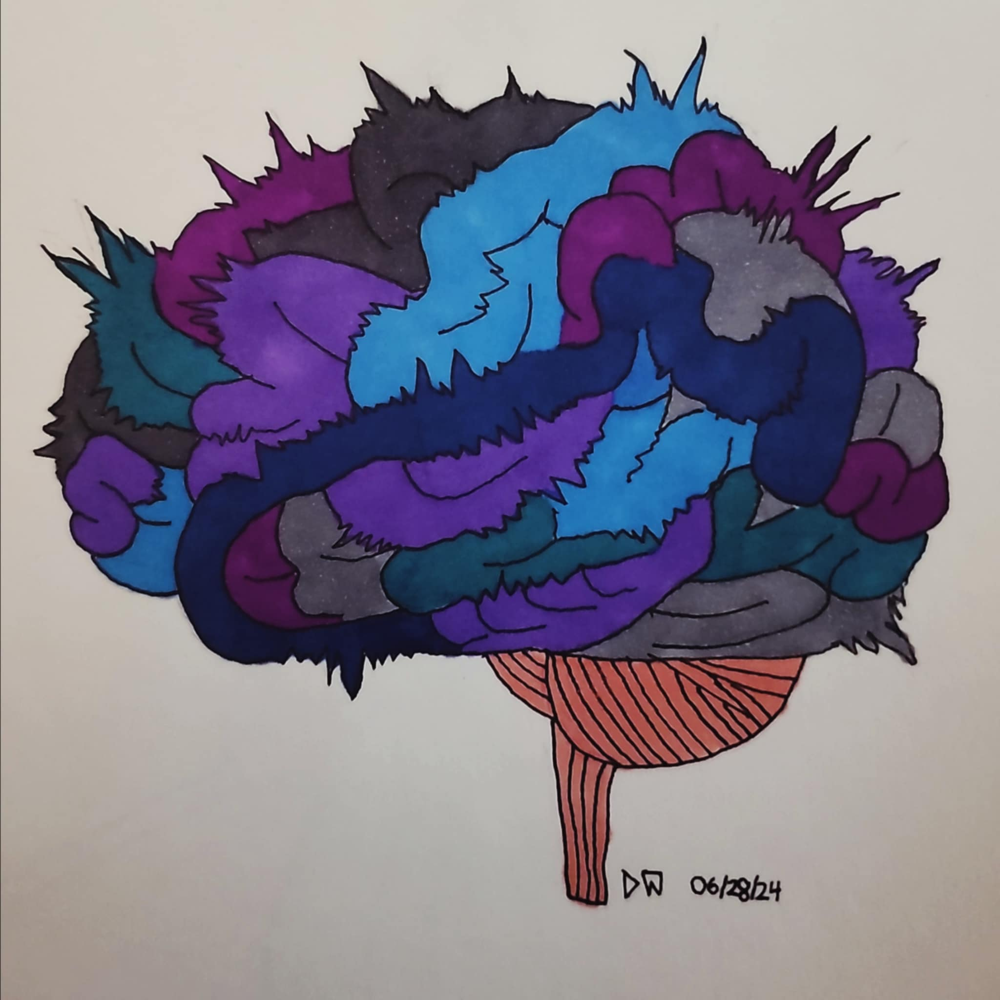
David White’s Distant Planet (October 1, 2024) and Kiana Jimenez’s Darkness Descends exist as twin visions of isolation and mystery, converging where the vast unknown meets the weight of despair. Together, they reveal the alien beauty of landscapes—whether external or internal—that feel both breathtaking and suffocating.
The illustration opens a portal to another world: a terrain of fractured cliffs and shadowed valleys beneath a blazing red sun. The jagged edges and stark emptiness suggest a world uninhabited—or one abandoned long ago. Its silence is heavy, its distance immeasurable, yet it thrums with a vitality that dares us to step forward. The planet itself seems alive, daring explorers to uncover secrets that might be too heavy to bear.
The poem Darkness Descends echoes this unearthly solitude in human terms. Night does not simply fall—it crushes, suffocates, cloaking all in hopeless shadow. Hope once flared, only to die under the weight of obsession and disbelief. Spirits hover, disoriented, mourning the loss of direction.
“The night falls in a heavy, suffocating cloak.
All hope must end. Your passion throbs no more.”
Both illustration and poem are meditations on endings: the extinction of light, the collapse of belief, the emptiness of terrain once vibrant with life. Where Distant Planet captures the physical vastness of silence and separation, Darkness Descends embodies its emotional truth—the haunting realization that even the brightest flames fade.
Together, they create a fusion where cosmic landscapes mirror the soul’s darkest moments. The cliffs crumble into abyss, and hope dissipates into void. Yet in the act of expression—through color, through word—both pieces insist that even in descent, meaning survives.

Leave a Reply