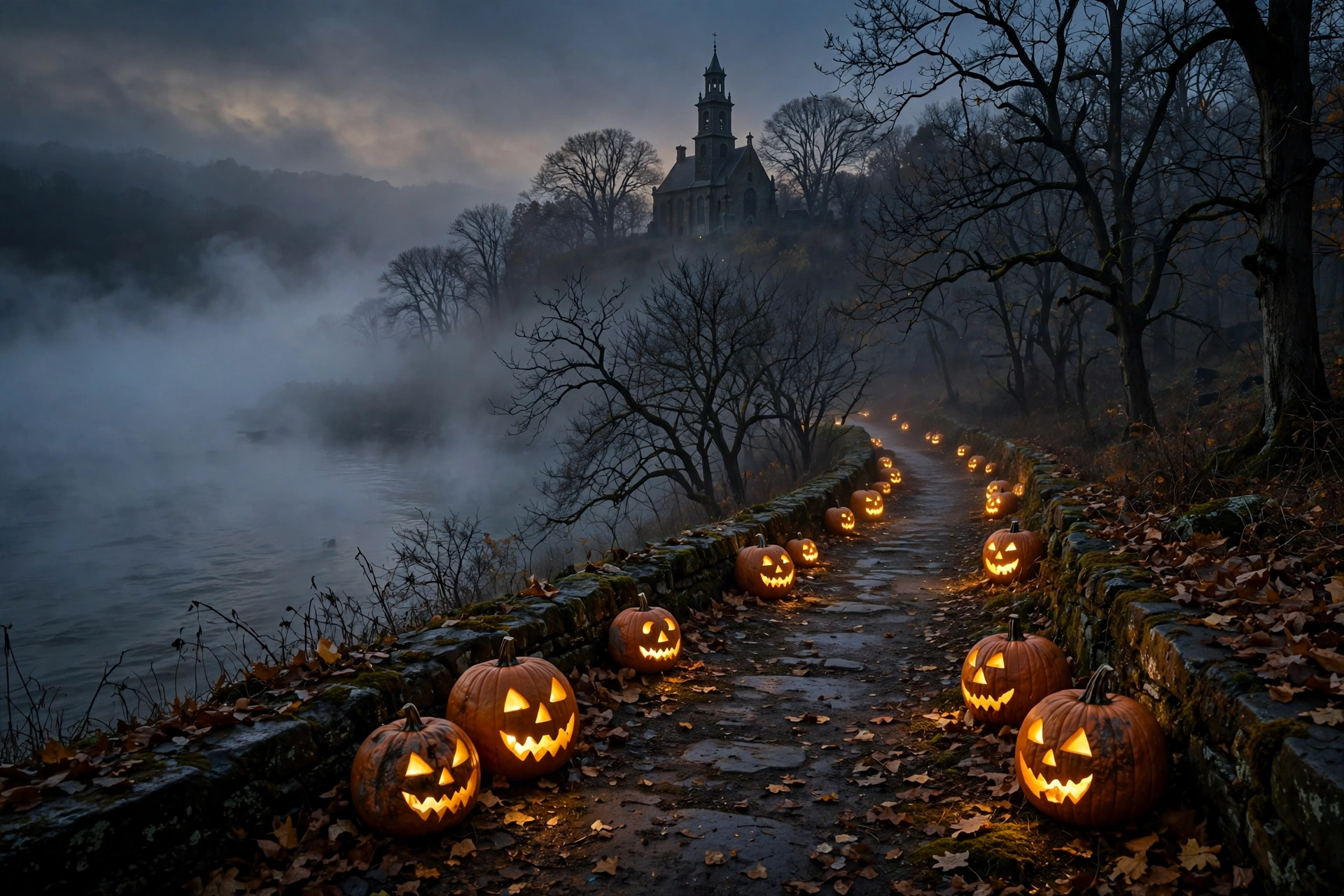
October in Sleepy Hollow isn’t a costume you put on. It’s home. The fog comes off the Hudson, the pumpkins glow along the trail, and the legend everyone else visits for a weekend is just… where I live. I wrote this for the village that taught me darkness doesn’t have to be something you run from. Sometimes it’s just the place that holds you.
The fog rolls in off the Hudson,
soft as a held breath,
and the pumpkins light their faces
along the path home.
Here, October doesn’t arrive —
it rises, like something remembered,
lanterns in the windows,
shadows learning how to glow.
They say a horseman rides these roads
with no head and no mercy,
but I’ve walked them in the dark
and never once been afraid.
The old stones keep their names,
the church bell keeps its hour,
and the river keeps its promise
to carry it all downstream.
Darkness here is not a monster.
It’s a neighbor. It’s a season.
It’s the quiet that sits beside me
and doesn’t ask me to be less.
So let the visitors come
with their cameras and their ghost stories.
I’ll be here when the lights go out,
at home in the hollow,
where the legend lives —
and so do I.

Leave a Reply