
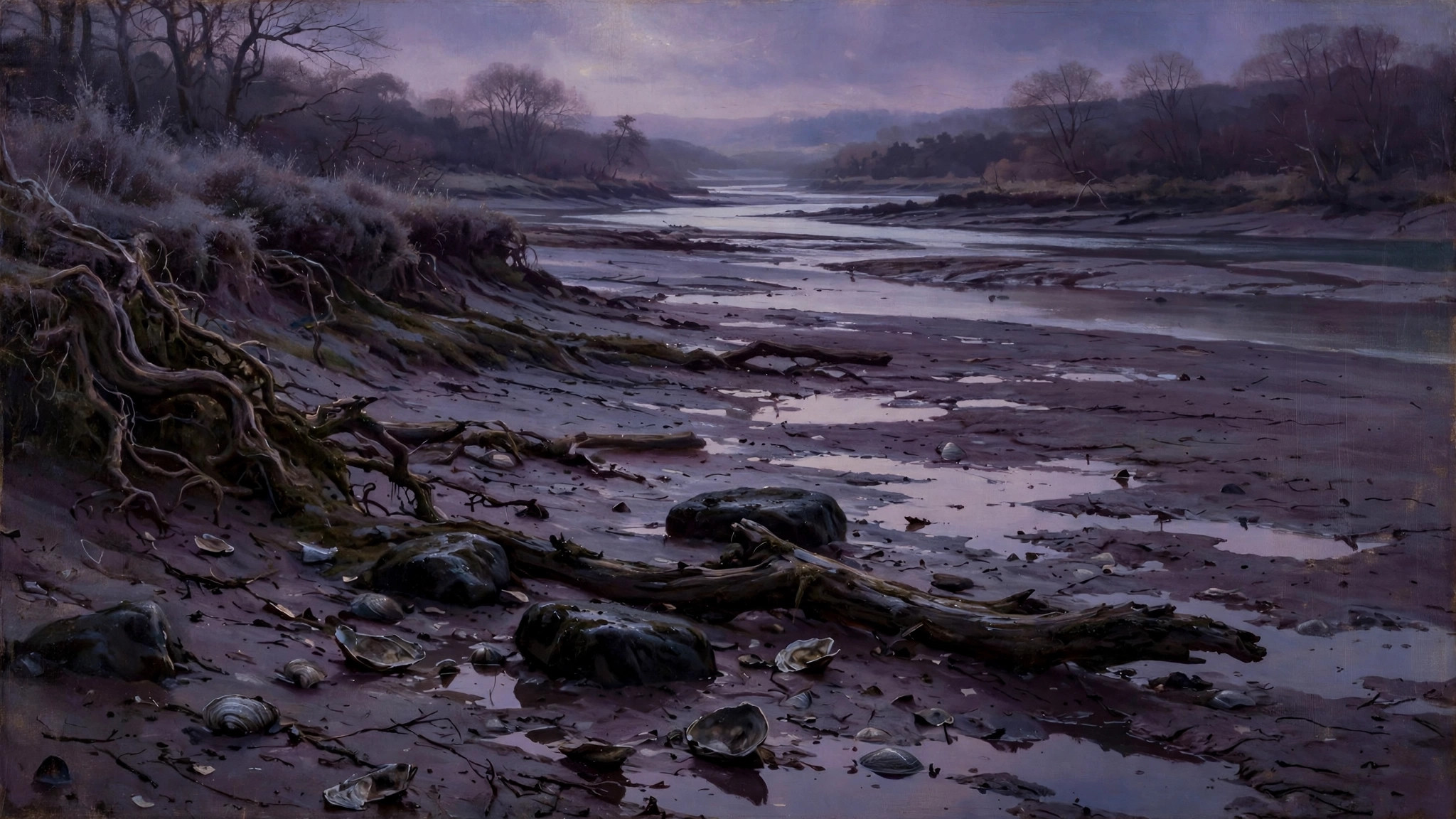
The river recedes without apology.
At low tide, the Hudson reveals what it usually keeps hidden—stones slick with algae, broken shells tucked beneath the surface, twisted roots reaching from the shoreline, fragments of driftwood polished by years of patient abrasion. It is not the river at its most picturesque. It is the river at its most honest.
There is something profoundly human about low tide.
We spend so much of our lives keeping difficult things submerged. We become skilled at maintaining composure, at presenting only what feels acceptable to the world. We learn to smile while carrying grief, to laugh while nursing exhaustion, to answer “I’m fine” with convincing precision. The hidden parts remain beneath the surface, invisible to everyone—including, sometimes, ourselves.
Then life pulls back.
Loss.
Illness.
Disappointment.
A quiet afternoon with too much time to think.
Without warning, the water recedes, exposing everything we believed had disappeared.
For years, I mistook these moments for regression. Whenever old sadness resurfaced, I assumed I had failed some invisible test of healing. I believed progress meant never returning to familiar pain.
The Hudson disagrees.
Every tide leaves.
Every tide returns.
Neither movement cancels the other.
Watching the shoreline emerge has changed how I understand emotional exposure. Rocks that appeared smooth beneath deep water reveal jagged edges once uncovered. Driftwood, stripped of bark and leaves, carries the marks of every season it has survived. Nothing the river exposes is diminished by being seen more clearly.
Perhaps people aren’t either.
Low tide is not the river’s weakness.
It is part of its rhythm.
The same is true of us.
There are days when memory withdraws its protective distance. Conversations I thought I’d forgotten replay with startling clarity. Faces return. Voices linger. Regrets step quietly into the present, asking to be acknowledged rather than ignored.
Once, I would have hurried away from these moments.
Now I try to remain.
The shoreline teaches patience.
Nothing exposed by the tide is asking for immediate repair. Some stones simply need sunlight. Some scars need air. Some memories ask only to be witnessed before the water carries them gently beneath the surface again.
Healing is not constant movement forward.
Sometimes it is standing still long enough to understand what has always been there.
The river never apologizes for revealing itself.
It does not rush to cover every exposed stone before anyone notices. It trusts its own cycles completely. Soon enough the water will rise again, not to erase what was revealed, but to continue its endless conversation with the shore.
That trust feels radical.
We live in a culture that celebrates completion. Finished projects. Resolved conflicts. Happy endings. Yet the natural world offers a different wisdom. Nothing here is ever truly finished. Seasons return. Rivers rise and fall. Trees lose leaves only to grow them again. Completion is not nature’s goal.
Continuation is.
Standing at the river’s edge, I find myself asking gentler questions.
Not:
Why am I hurting again?
But:
What is this pain trying to show me?
Not:
Why haven’t I moved on?
But:
What part of me still deserves compassion?
The answers arrive slowly, like the returning tide.
They do not solve everything.
They do not erase loss.
But they remind me that tenderness is not evidence of failure.
It is evidence of having loved deeply enough to be changed.
As the water gradually rises, stones disappear one by one beneath familiar currents. The shoreline softens. Reflections return. The river becomes recognizable again.
Yet I know what lies beneath.
Not because it frightened me.
Because it introduced itself.
Low tide teaches that vulnerability is not collapse.
Exposure is not defeat.
Some truths can only be discovered after the water has gone.
The Hudson never hides its cycles.
Neither should I.
← Previous: The Hudson as Healer · Back to the series introduction · Next: When the River Refuses Me →


Leave a Reply