,

One Small Lamp: “The Light That Stays After” — Substack Issue #5

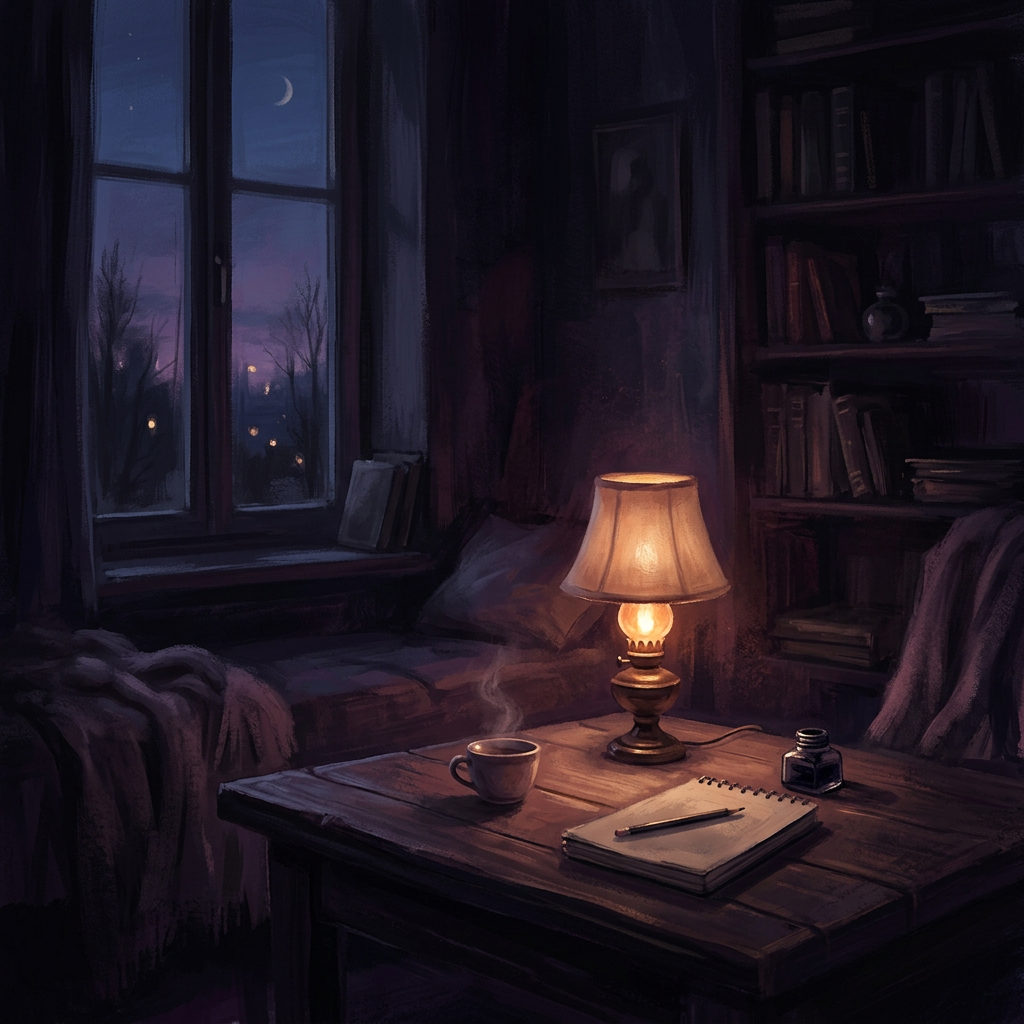
Desk with lamp, coffee, notebook, and ink beside a moonlit window

October is thinning at the edges now, the light leaving earlier and asking less of me. Issue #5 of the Poetic Bipolar Mind Substack, “The Light That Stays After,” is Kiana Jimenez writing for a season when it is easier to give in to the dark than to name it — a reflection on keeping a small lamp lit through the darker months, and a poem written just for the issue about lighting one small lamp, letting the shadows settle, and giving the dark a shape to hold.

Its thesis fits in one line: the light that stays after is the one you make room for, not the one you chase.

📖 Read it free on Substack: https://poeticbipolarmind.substack.com/p/the-light-that-stays-after

Subscribe while you’re there — new issues land every Wednesday, and subscribers get them first.

Discover more from Poetic Bipolar Mind

Subscribe to get the latest posts sent to your email.

Leave a Reply

Your email address will not be published. Required fields are marked *


Discover more from Poetic Bipolar Mind

Subscribe to get the latest posts sent to your email.

  • The Weight of Words

    To become a writer, you must break yourself open—shatter into pieces and let the wounds speak. Writing is surrender, a war between feeling and language. It’s living half in this world, half in another, because not writing is to suffocate. Sometimes, the answer is a blank page.

  • Unspoken

    So many words remain unspoken, yet love speaks in the quiet. In the darkness, hearts open, storms fade, and silence becomes a symphony. Without uttering a sound, the soul finds its home in another—where unspoken truths echo louder than words and love is understood without a single breath.

  • The Human Emotion: Sadness

    The Human Emotion: Sadness

    Sadness is more than an unpleasant feeling. The Human Emotion: Sadness examines its psychological purpose, biological effects, childhood development, empathy, emotional regulation, and the powerful role parents play in shaping healthy coping.