There are places that become part of our biography long before we realize they have been writing us.
For me, the Hudson River is one of those places.
It has witnessed mornings of quiet gratitude and evenings heavy with memory. It has reflected celebrations I scarcely noticed and grief I believed would never loosen its grip. It has remained unchanged while I have become countless versions of myself. In its constancy, I found something I had spent years searching for—not answers, but companionship.
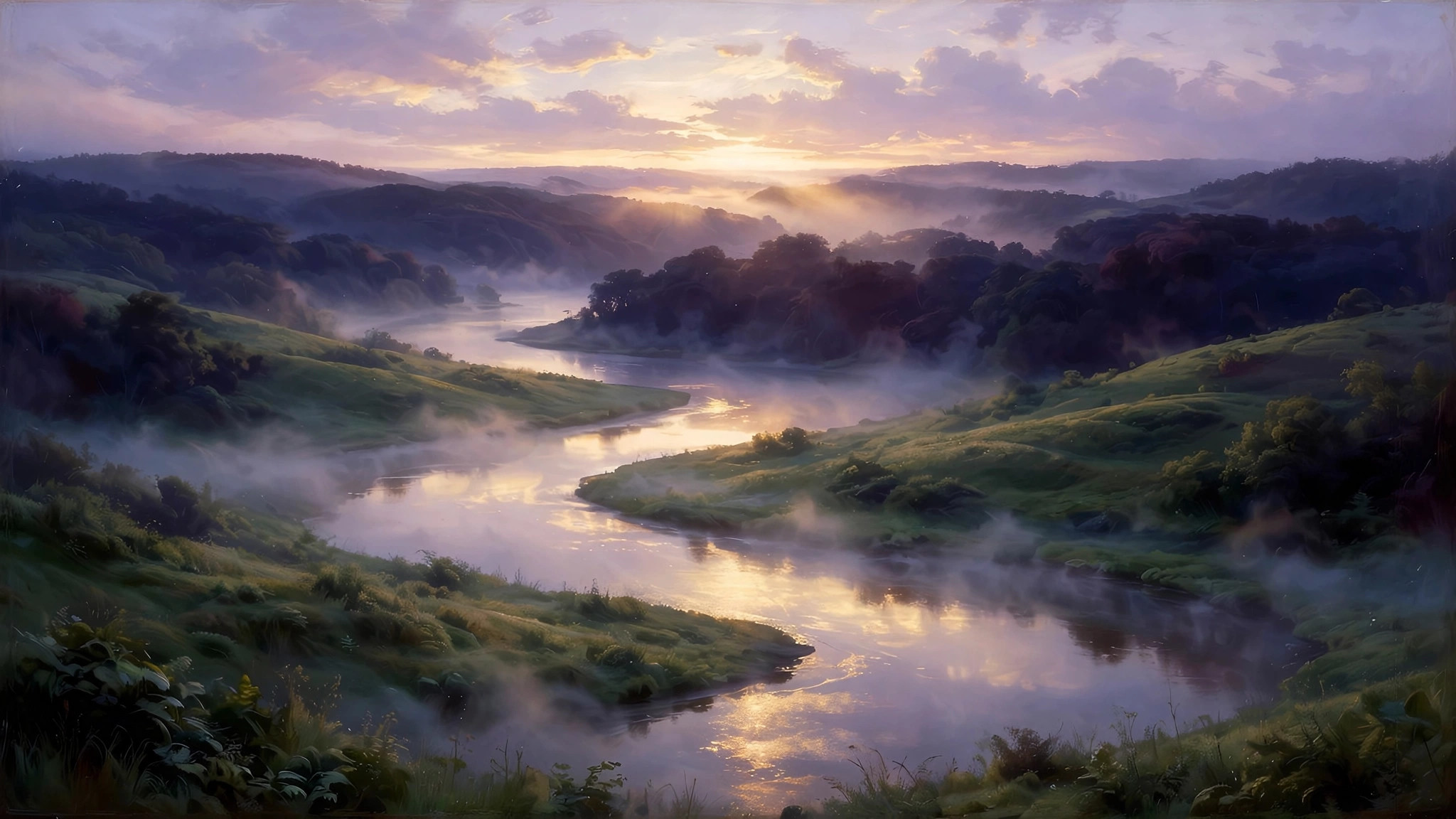
The Hudson as Healer is not a guide to recovery, nor is it a collection of instructions for overcoming pain. It is an invitation to slow down and notice the subtle wisdom offered by a river that has outlived generations of human stories. These essays explore the ways nature quietly mirrors our emotional landscapes, revealing that healing is rarely dramatic. More often, it unfolds through ordinary moments of attention: fog settling over still water, tides revealing hidden shorelines, wind disrupting perfect reflections, or silence stretching across an early morning sky.
Throughout this series, the Hudson becomes more than scenery. It becomes a teacher.
Its tides speak of grief’s returning rhythms. Its bridges remind us that connection does not erase distance. Its storms challenge the illusion that peace is permanent, while its quiet mornings reveal the restorative power of simply remaining present. Every changing season offers another lesson—that growth does not always appear as progress, that vulnerability is not weakness, and that constancy often matters more than certainty.
These reflections are deeply personal, yet they are written with the hope that they become personal for others as well. Every reader carries invisible currents: memories that surface unexpectedly, losses that continue shaping ordinary days, hopes that quietly endure despite disappointment. The river reminds us that none of these experiences are anomalies. They are part of being fully human.
In a culture that often celebrates speed, productivity, and definitive resolutions, the Hudson offers another philosophy. It asks nothing except our attention. It keeps no measure of success. It does not reward perfection or punish unfinished healing. It simply continues—patiently, faithfully, season after season.
Perhaps that is why I continue returning.
Not because the river solves my questions.
Not because it removes grief.
But because it reminds me that life can hold contradiction without collapsing beneath its weight. That joy and sorrow can occupy the same shoreline. That healing is less about leaving pain behind than learning to live honestly beside it.
If these essays accomplish anything, I hope they encourage you to pause—to listen more carefully, to observe more deeply, and to recognize that the natural world often speaks in languages quieter than words. Sometimes the greatest lessons arrive not through extraordinary moments, but through ordinary landscapes we have learned to overlook.
Thank you for walking this shoreline with me.
May these reflections offer what the Hudson has so generously offered me:
Not certainty.
Not perfection.
But presence.
Welcome to The Hudson as Healer.
In this series:
- Series Introduction — The Hudson as Healer (you are here)
- PaPart 1 — The Hudson as Healer
- Part 2 — Low Tide Lessons
- Part 3 — When the River Refuses Me

Leave a Reply