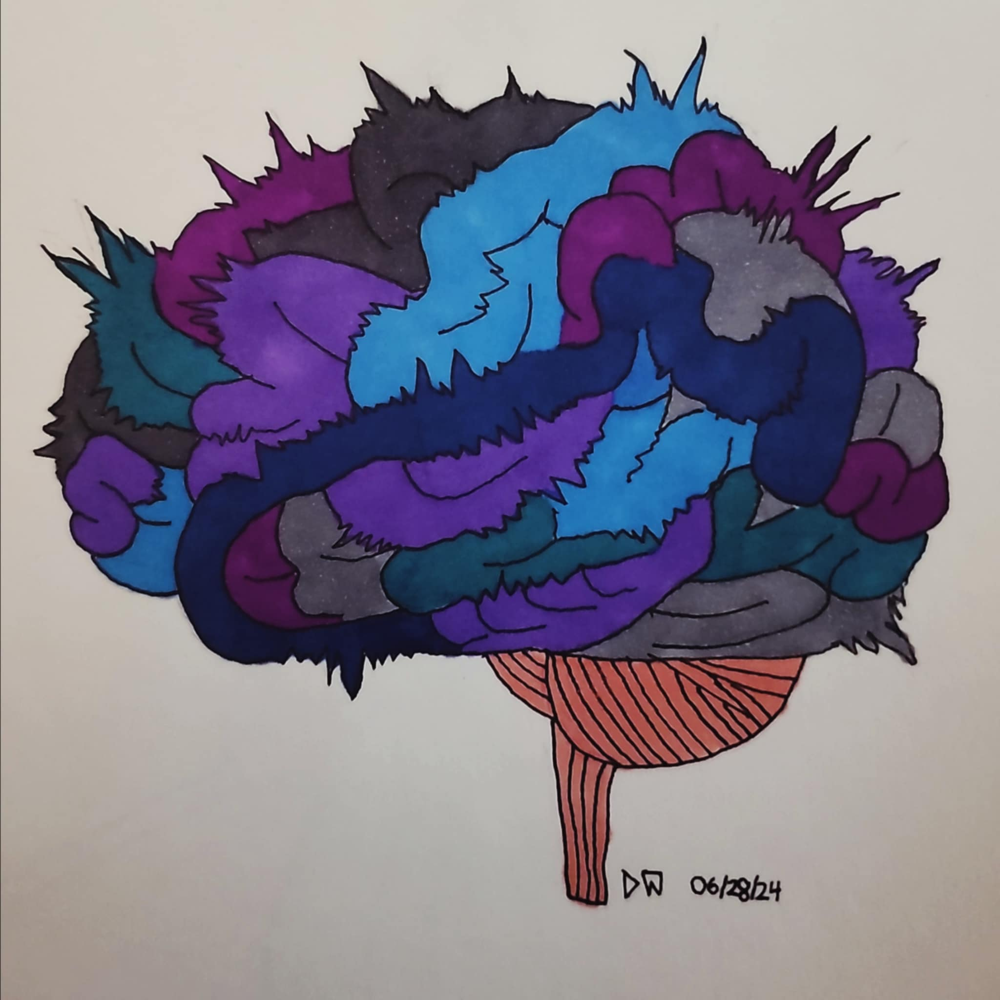
David White’s Willow (May 24, 2024) and Kiana Jimenez’s Binds converge in a haunting meditation on captivity, resilience, and the deceptive nature of freedom. Together, they reveal how even strength can feel like confinement, and how hope flickers even within sorrow’s shadow.
The illustration portrays a weeping willow, its cascading branches forming a veil that shields its inner trunk. The tree stands with quiet power, yet its very form suggests sorrow and entrapment. The drooping limbs resemble chains, binding the tree even as it persists in its rooted existence. There is beauty in its shape, but that beauty is inseparable from grief.
In the poem Binds, the speaker voices the same paradox. They describe being alive but hollow, free yet shackled by forces beyond their control—memories, guilt, or the lingering ache of wounds that never fully heal.
“I thought escape would heal my pain,
Yet I’m trapped in binds I can’t explain.”
Like the willow, the speaker stands resilient yet confined. Their words echo the twisting branches, each line a thread of sorrow woven into endurance. Freedom, they suggest, is an illusion—choices feel like snares, the future obscured by the weight of the past. And yet, both tree and speaker persist.
The willow’s veil becomes the poem’s mist, both carrying the same subtle message: even in the deepest entrapment, there remains a flicker of hope. Though fragile, it is enough to endure, to rise, to hold on.
Together, Willow and Binds embody the duality of human existence: that strength often grows from sorrow, that freedom may feel false, but persistence itself is a form of liberation.
Leave a Reply