The Meaning of Life in Waiting for Godot
“Nothing happens, nobody comes, nobody goes, it’s awful.”
— Samuel Beckett
Existentialism and Meaning
The main underlying theme in the play is existentialism and the human struggle to create meaning in what seems to be a meaningless life. Existentialism is a philosophy that the idea of religion can bring meaning to someone’s life, that we are only instruments in the process of creating our own meaning. Estragon is the more unimaginative character while Vladimir is the more intelligent one. They seem to be outcast from society, and are all alone in the middle of nowhere. Vladimir and Estragon represent man in general, they are facing the problems of existence in the world. They are depend on each other and hope for salvation. Both characters express the existential struggle of life in a similar way: it is useless to fight the struggle, because the end result will always be the same: we are all going to die.
“What are we doing here that is the question…one thing is clear. We are waiting for Godot.”
Waiting for Godot
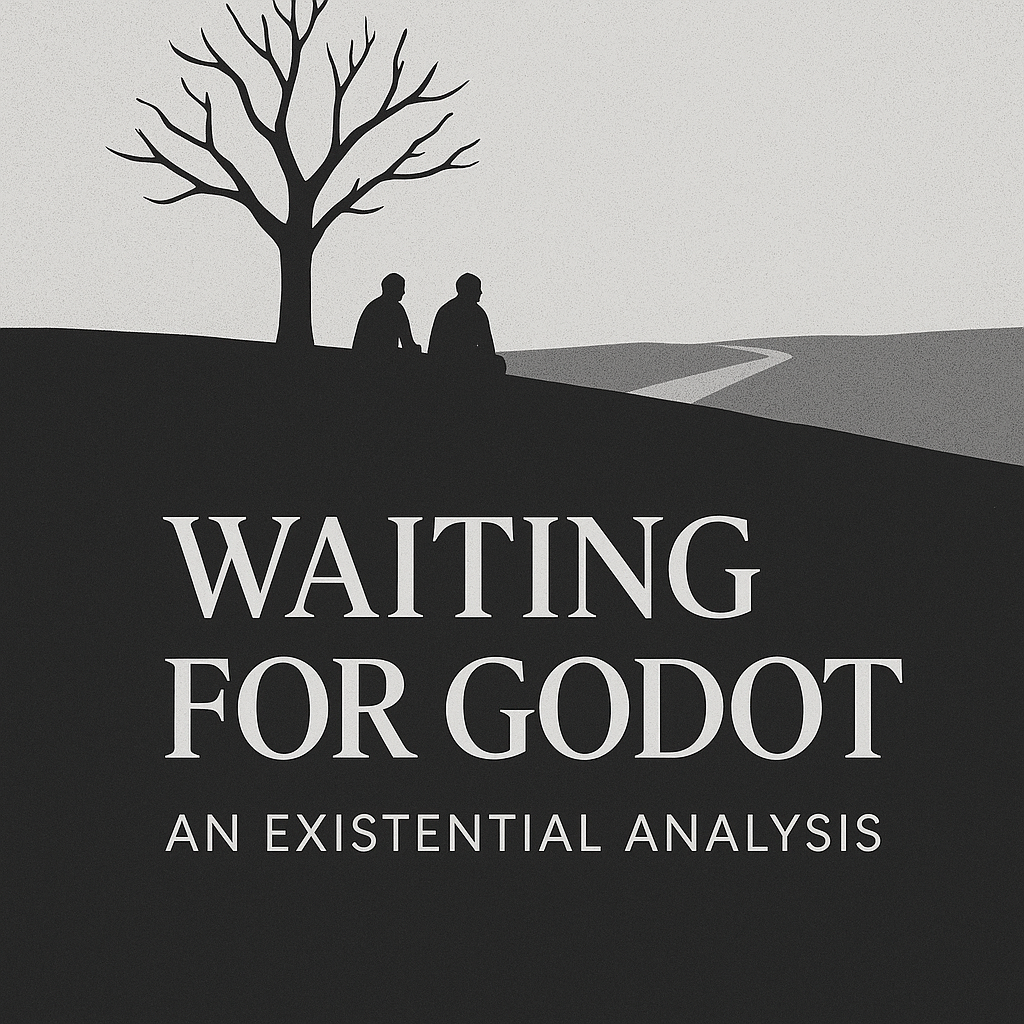
The play focuses on the lack of purpose and the uncertainty of life; and the anxiety of existence. It shows how knowledge about the world and memories are unreliable. The characters are crippled with inaction and anxiety. The play starts with Estragon saying: “Nothing happens, nobody comes, nobody goes, it’s awful.” His friend Vladimir reminds Estragon that they can’t leave and nothing can be done but wait. The two main characters are wasting time in their life doing nothing but waiting for this mysterious man that may or may not show up. They wait around for the mysterious Godot, as if then they’ll be able to take action when he comes. Godot is that one thing they are waiting for that might be able to give them meaning. There is also a religious interpretation to this play in the sense that people rely on supreme beings to dictate the next step they should take. They attribute their past actions to god, and rely on god to give their life purpose.
Vladimir
The more intelligent one — reasoning, remembering, and hoping beside Estragon as they wait.
Estragon
The more unimaginative character — enduring the nothingness of the wait at Vladimir’s side.
Pozzo, Lucky, and Meaningless Relationships
Even the relationships between the characters are existential in the play. For example, Pozzo wants to form a relationship with the two main characters. His only friend is Lucky, who has no choice to but to have a relationship with Pozzo because he is his slave. Pozzo ended up not creating a friendship with Estragon and Vladimir; that shows that Pozzo has the ability of creating many meaningless relationships. Also, Pozzo expresses how pointless his existence in the world is. He makes us question life: is it all just a joke or show to keep us entertained while we wait to die.
Hopelessness at the End
The existentialist theme in the play identifies meaning of human struggle in what may be meaningless life The philosophy of existentialism is shown through the idea of religion can bring meaning to someone’s life. In the end the play ends in hopelessness: time nor existence, reality nor memory or the past have any meaning or significance. Existence for the characters is an impression and happiness is impossible, merely nothing but a fairy tale.
“happiness is impossible, merely nothing but a fairy tale.”
Leave a Reply