There are days the Hudson does not soothe.
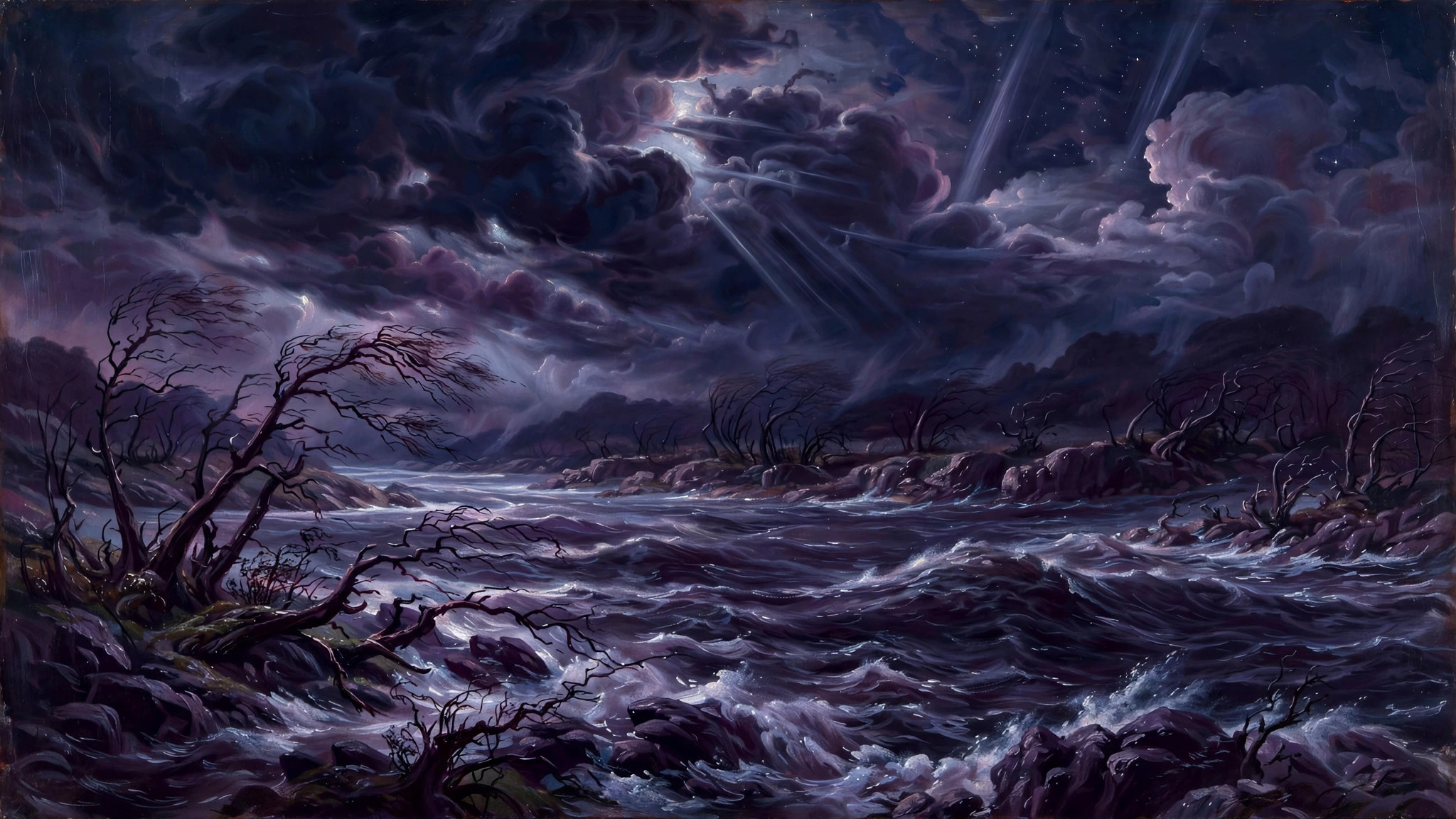
The wind arrives before I do, sweeping across the water with enough force to erase every reflection. Waves strike the shoreline with impatient rhythm. The current seems sharper somehow, less interested in carrying, more intent on reminding me that rivers answer to no one.
I stand there expecting comfort.
Instead, I meet resistance.
There was a time when this unsettled me. I had come to depend on the river’s quiet companionship, believing it would always mirror the peace I hoped to find within myself. On difficult mornings, I expected calm water. Gentle light. Soft reassurance.
Nature, however, has never promised emotional convenience.
The Hudson owes me nothing.
That realization changed the way I understand healing.
We often imagine recovery as a gentle ascent toward tranquility—as though every step forward should feel lighter than the one before it. Books speak of breakthroughs. Social media celebrates transformation. Even our language suggests permanence: healed, recovered, moved on.
But real healing refuses such tidy narratives.
Some days the body remembers before the mind does.
A familiar scent.
A passing song.
A date on the calendar.
A name spoken unexpectedly.
Without warning, emotions long believed settled rise with astonishing force. Grief returns wearing a different face. Anger resurfaces after months of silence. Questions once buried ask to be heard again.
These moments are easy to mistake for failure.
The river teaches otherwise.
Watching turbulent water, I notice that chaos is still movement.
The current has not stopped.
It has simply changed its expression.
There is honesty in that.
The Hudson does not perform serenity to reassure those standing on its banks. It allows itself to be contradictory. One morning it glitters beneath a cloudless sky, reflecting every color the horizon offers. The next, it darkens beneath gathering storms, swallowing light into restless depths.
Neither version is more authentic.
Both belong.
Perhaps people do, too.
For much of my life, I believed I had to choose which parts of myself deserved visibility. Confidence or fear. Gratitude or sadness. Hope or disappointment.
The river refuses those divisions.
It carries driftwood beside wildflowers.
Mud beside sunlight.
Stillness beside violence.
It never asks one to cancel the other.
Standing along the shoreline, I begin to recognize that emotional contradiction is not evidence of instability. It is evidence of complexity.
I can be grateful for my life while mourning what it has cost.
I can experience joy without betraying my grief.
I can move forward without pretending the past no longer walks beside me.
The river has never separated these truths.
Why should I?
There are afternoons when the wind grows so loud it drowns every thought. Conversation becomes impossible. Reflection disappears beneath broken waves.
Oddly enough, these are the moments that ask the most of me.
Not because they provide answers.
Because they remove distractions.
Without the comfort of beautiful scenery, I am left only with presence.
Just myself.
The wind.
The water.
Nothing else.
It is tempting to leave.
Sometimes I do.
Other times I remain, allowing discomfort to exist without demanding immediate resolution.
There is strength in staying with what cannot yet be solved.
Modern culture encourages us to optimize every experience. If something feels difficult, we search for techniques to eliminate the discomfort. We measure success by how efficiently we recover, how quickly we bounce back, how convincingly we appear whole.
The Hudson knows nothing of optimization.
Storms arrive.
Floodwaters rise.
Ice forms.
Banks erode.
The river adapts, but it never apologizes for the seasons it must endure.
Watching this quiet resilience, I realize that healing may have less to do with feeling peaceful than with remaining present.
Presence does not require certainty.
It requires willingness.
Willingness to sit beside unanswered questions.
To witness emotions without immediately correcting them.
To trust that movement continues even when progress cannot be seen.
As evening approaches, the wind begins to settle.
The surface remains unsettled, but small reflections slowly return. They are imperfect—broken by lingering ripples—but they exist nonetheless.
The river has not become calm.
Only calmer.
There is wisdom in that distinction.
Life rarely grants complete resolution.
Instead, it offers moments of steadiness between storms, enough light to continue walking, enough silence to hear our own hearts again.
Perhaps healing has never meant becoming untouched.
Perhaps it means learning that peace and unrest are not enemies.
They are neighboring currents within the same river.
The Hudson does not ask me to become unbreakable.
It asks something far more difficult.
To remain.
Even when comfort is not on offer.
Even when the water refuses to mirror hope.
Even when the only lesson left is this:
A river can be wild and faithful at the same time.
So can we.
← Previous: Low Tide Lessons · Back to the series introduction


Leave a Reply