,

A Fourteenth Door That Breathes: “The Fourteenth Room” — Veil Tales Part 1

A house with thirteen rooms. A fourteenth door that breathes. 🗝️

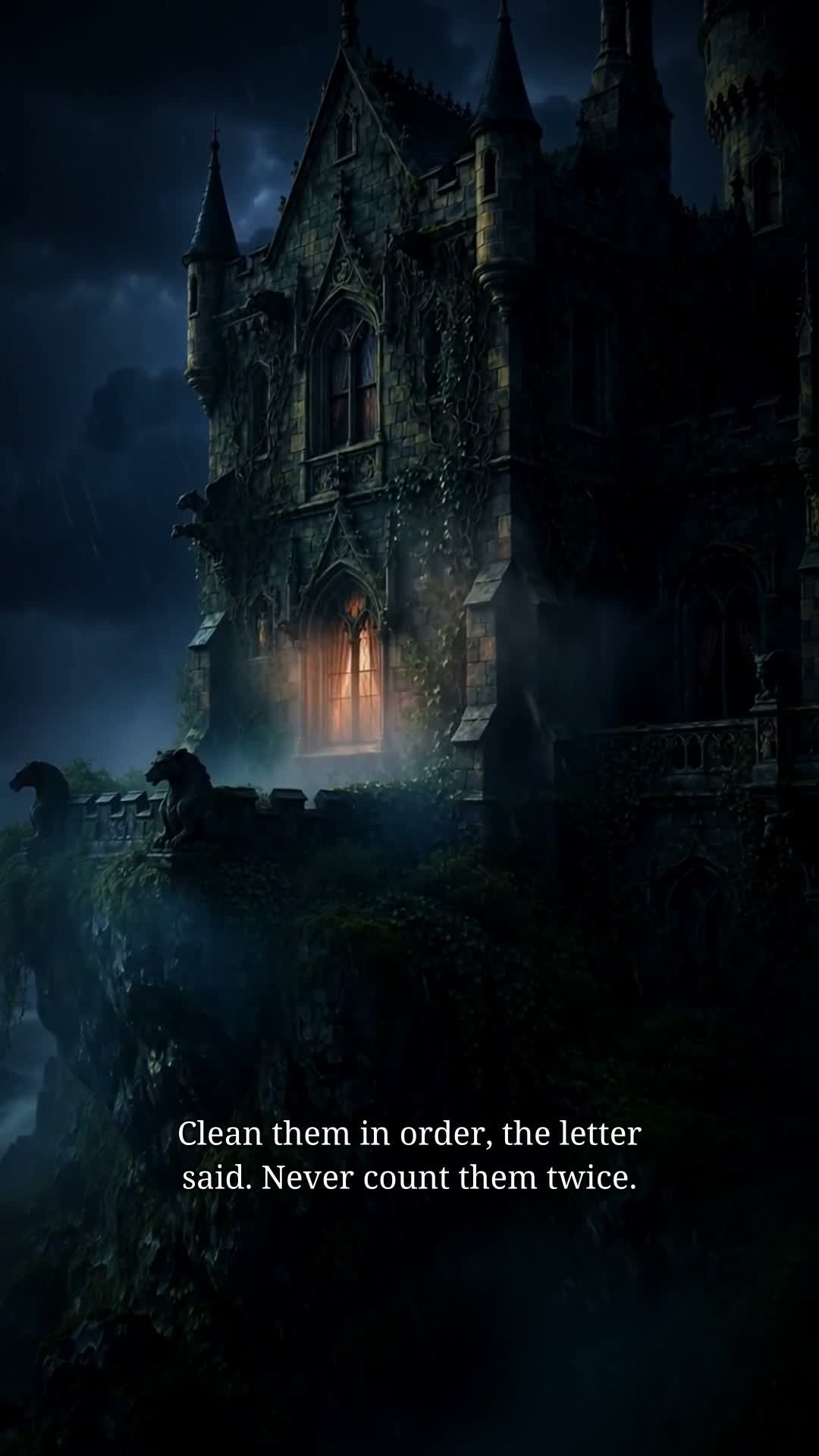
Veil Tales is my serialized gothic mini-movie — a story told 60 seconds at a time, and every episode ends somewhere you won’t expect. Part 1, “The Fourteenth Room,” opens the series: a housekeeper is hired to clean a house with thirteen rooms, in order, and never count them twice. On the first night, she counts anyway.

Watch Part 1:

Transcript

They hired me to keep a house with thirteen rooms. Clean them in order, the letter said. Never count them twice. The first night, I counted anyway. Thirteen doors along the landing. Thirteen keys on my ring. I slept. At three in the morning, something knocked from inside the wall. I counted again, the way you check a lock you know you locked. One. Two. Three. The doors had moved. And between the nursery and the linen room stood a fourteenth door. It was warm. And from underneath it, breathing. I have cleaned this house for nine nights now. The door is still there. Tomorrow, I open it.

Written & created by Kiana Jimenez · Poetic Bipolar Mind. A new part arrives every Friday — follow @poeticbipolarmind so you don’t miss it.
Discover more from Poetic Bipolar Mind

Subscribe to get the latest posts sent to your email.

Leave a Reply

Your email address will not be published. Required fields are marked *


Discover more from Poetic Bipolar Mind

Subscribe to get the latest posts sent to your email.

  • The Meaning of Life in Waiting for Godot

    The Meaning of Life in Waiting for Godot

    The Meaning of Life in Waiting for Godot “Nothing happens, nobody comes, nobody goes, it’s awful.” — Samuel Beckett Existentialism and Meaning The main underlying theme in the play is existentialism and the human struggle to create meaning in what seems to be a meaningless life. Existentialism is a philosophy that the idea of religion…

  • Faith as a Pseudo-Science

    Can faith stand trial in a courtroom, or survive the cold eye of a laboratory? An essay on belief without evidence, and why justice and religion were never meant to share the same bench.

  • Is Google Enhancing Our Intelligence?

    Is Google Enhancing Our Intelligence?

    Is Google expanding our minds or reshaping how we think? This essay explores whether constant access to information makes us more intellectual or more dependent. By examining memory, attention, and critical thinking, it asks if the digital age is sharpening our intellect—or quietly rewriting it.