
Finding balance between academic pressure, financial responsibility, physical wellness, and the emotional weight of everyday life.
College life is often described as an exciting chapter of independence, opportunity, and personal growth. Yet beneath the promise of academic achievement lies a demanding reality: endless assignments, examinations, employment responsibilities, financial concerns, family obligations, and the constant pressure to succeed. For many students, the challenge is not simply finding enough hours in the day but finding enough energy to survive them. When responsibilities accumulate faster than they can be resolved, stress becomes more than an occasional inconvenience. It begins to influence concentration, emotional stability, sleep, physical health, and the ability to enjoy everyday life.
Although stress is an unavoidable part of the human experience, allowing it to dictate every waking moment can gradually undermine our well-being. One accessible strategy for managing that pressure is regular physical activity. Whether through weightlifting, running, dancing, swimming, recreational sports, or an afternoon walk, exercise provides an opportunity to redirect nervous energy, interrupt overwhelming thought patterns, and establish a healthier relationship with our bodies.
However, an important question remains: Does improving your physical and mental well-being require an expensive gym membership, or can meaningful results be achieved without sacrificing financial stability?
The answer involves more than choosing between a treadmill and a pair of running shoes. It requires understanding the relationship between movement and mental health, recognizing the financial realities of fitness, and discovering an approach that complements individual circumstances rather than complicating them.
The Invisible Weight of College Stress

For college students, stress rarely arrives as a single overwhelming event. More often, it accumulates through seemingly manageable responsibilities until even ordinary tasks begin to feel exhausting. A student might spend the morning attending lectures, the afternoon working a part-time job, and the evening completing assignments while simultaneously managing family responsibilities and maintaining relationships. By the time the day ends, the opportunity to rest may already have disappeared.
The consequences of prolonged stress extend beyond feeling frustrated or overwhelmed. Chronic stress can interfere with sleep, contribute to digestive discomfort, worsen headaches, and place additional strain on cardiovascular health. It may also influence motivation, memory, and emotional regulation, creating a frustrating cycle in which academic responsibilities become increasingly difficult to manage.
Consider a student preparing for several examinations while working additional shifts to afford tuition and transportation. Although studying longer might seem like the most productive response, sacrificing sleep and physical activity can leave that student increasingly exhausted. The resulting difficulty concentrating may then require additional study time, reinforcing the very stress the student is attempting to overcome.
Physical activity offers a way to interrupt this cycle.
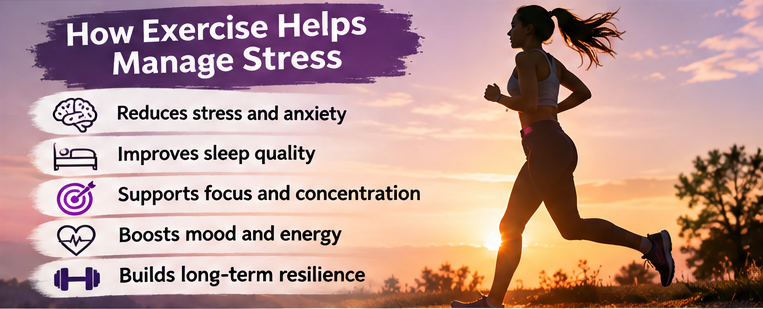
According to the Centers for Disease Control and Prevention (CDC), exercise can provide immediate benefits, including reduced feelings of anxiety and improved sleep quality. Regular activity also contributes to long-term physical and psychological health.
Exercise does not eliminate examinations, financial obligations, or personal difficulties. Instead, it can improve our ability to approach those challenges with greater physical energy and emotional resilience.
Exercise: More Than a Physical Transformation
Fitness culture frequently emphasizes visible results: weight loss, muscle definition, physical endurance, and changes in appearance. Although these outcomes may motivate some individuals, they represent only part of what regular exercise can offer.
Physical activity can also influence the way we think, feel, and respond to difficult situations.
The World Health Organization (WHO) recognizes regular physical activity as an important contributor to mental health, cognitive functioning, and overall well-being. Exercise can help reduce symptoms of anxiety and depression while supporting cardiovascular health and reducing the risk of several chronic diseases.
These benefits are especially meaningful for students experiencing demanding schedules and persistent psychological pressure.
A Natural Outlet for Stress and Anxiety
Stress can manifest physically through tense muscles, restlessness, shallow breathing, headaches, and difficulty relaxing. When the mind remains occupied by deadlines, unresolved conflicts, or financial concerns, the body may respond as though it must remain constantly prepared for another challenge.
Exercise provides a constructive outlet for some of this accumulated tension.
A student who spends hours sitting through lectures might discover that a brisk walk helps relieve restlessness. Someone struggling with frustration after a difficult examination may find that lifting weights provides a structured activity requiring concentration and controlled effort. Another student might prefer dancing, cycling, or swimming because the rhythm of movement creates a temporary separation from academic responsibilities.
These activities do not need to be particularly strenuous to offer benefits. The objective is not to exhaust the body into silence but to establish a healthier balance between physical exertion and psychological recovery.
Better Sleep, Better Days
Sleep and stress frequently influence one another. Stress can make it difficult to fall asleep, while insufficient sleep may intensify irritability, reduce concentration, and make ordinary responsibilities feel more demanding.
Regular physical activity can help improve sleep quality, providing another reason to incorporate movement into a demanding schedule.
For students who routinely sacrifice rest to complete assignments, the benefits of better sleep may extend into classroom participation, emotional regulation, and the ability to retain information.
Rather than viewing exercise as another obligation competing for limited time, it can be understood as an investment in the quality of the hours that remain.
Supporting Memory, Focus, and Concentration
Exercise is not exclusively beneficial to the muscles and cardiovascular system. Physical activity also contributes to brain health and may support aspects of cognitive functioning.
The CDC identifies cognitive health as one of the important benefits associated with physical activity. Research examining university students has also explored relationships among exercise, stress, and academic performance.
A systematic review and meta-analysis by Wunsch and colleagues (2021) investigated these interconnected factors, identifying physical activity as a potentially useful strategy for addressing stress-related difficulties among university students.
However, exercise should not be mistaken for a guaranteed method of improving grades. Academic performance depends on numerous factors, including study habits, sleep, educational resources, personal circumstances, and the quality of instruction.
The practical value of exercise lies in supporting conditions that make effective learning more manageable.
For example, a student experiencing difficulty concentrating after several consecutive hours of studying may benefit from taking a short walk before returning to an assignment. The break provides an opportunity for movement, mental separation, and renewed attention.
Sometimes, stepping away from a textbook is part of preparing to understand it.
Building a Routine That Fits Your Life
One of the greatest misconceptions surrounding fitness is that meaningful progress requires lengthy daily workouts or an exceptionally demanding exercise program.
In reality, consistency and sustainability are often more valuable than intensity alone.
A practical starting point for a busy college student is to schedule three 30-minute exercise sessions each week. These sessions might include running, dancing, lifting weights, cycling, swimming, or another enjoyable activity that increases the heart rate.
Although 90 minutes of weekly exercise falls below the general adult aerobic activity recommendation, it can provide a manageable starting point for someone developing a new routine.
The CDC recommends that adults aim for at least 150 minutes of moderate-intensity aerobic activity weekly, or 75 minutes of vigorous-intensity activity, alongside muscle-strengthening activities on at least two days.
That recommendation can be adapted to individual schedules and physical abilities.
A student might begin with three 30-minute workouts and gradually incorporate shorter walks between classes, additional recreational activities, or weekend exercise sessions.
The key is choosing activities that feel realistic enough to maintain.
A person who dislikes running does not need to become a runner. Someone uncomfortable exercising in crowded spaces does not need to force themselves into a busy gym. Physical activity can take many forms, and enjoyment can make consistency easier.
The most effective exercise routine is not necessarily the most demanding one. It is the one that can become a sustainable part of everyday life.
Beyond the Classroom: Developing Healthy Habits for Life
The benefits of physical activity are not limited to academic success. College is also a period in which individuals develop routines, priorities, and coping strategies that may continue into adulthood.
Learning to manage stress through movement can establish a foundation for healthier long-term habits.
Tricia Zelaya, identified in the original article as assistant director for student development and assessment at Purdue University’s Division of Recreational Sports, emphasized that participation in recreational fitness programs involves much more than physical conditioning.
“Going to the gym is so much more than going to the gym.”
Zelaya connected physical fitness with time management, wellness, and the broader development of students. She also described recreational fitness facilities as places where students learn to use physical activity to cope with stress.
Her observations highlight an important distinction: exercise can become more than a temporary response to academic pressure. It can develop into a reliable form of self-management.
Students who intentionally reserve time for physical activity practice organizing their schedules, establishing priorities, setting achievable goals, and maintaining commitments to themselves.
These habits can carry into professional responsibilities, relationships, and other areas of adult life.
A successful college experience should not be measured exclusively by grades, completed assignments, or academic recognition. Developing the ability to care for one’s physical and emotional health is also an important achievement.
Editorial note: Zelaya’s quotations and historical position are retained from the original article. The original publication or interview has not been independently located, so these quotations should be checked against the original reporting notes before publication.
The Financial Side of Fitness: Are Gym Memberships Worth the Cost?
Although the health benefits of exercise are well established, access to fitness facilities introduces another concern: affordability.
Many individuals recognize the importance of improving their physical health but feel uncertain about where to begin. Others hesitate because gym memberships appear financially unrealistic.
For college students already managing tuition, textbooks, transportation, housing, and everyday expenses, even a modest monthly membership can become another financial burden.
There is a certain irony in purchasing a gym membership to relieve stress only to discover that paying for it creates additional stress.
A membership intended to lighten your emotional burden should not become another weight on your wallet.
Understanding the True Cost of Membership
An earlier version of this article, written in the context of fitness options available around 2017, reported average gym membership costs of approximately $40–$50 per month. It also discussed initiation fees and additional expenses that could substantially increase annual costs.
At those historical monthly rates, membership alone would amount to approximately $480–$600 annually, before registration fees, personal training, transportation, or other charges.
The earlier article also reported that students at Westchester Community College (WCC) were generally willing to spend approximately $10–$20 monthly on gym memberships.
These figures illustrate the gap between what fitness facilities may charge and what financially constrained students consider affordable. They are historical observations from the original article, not verified current national averages or a representative survey of WCC students.
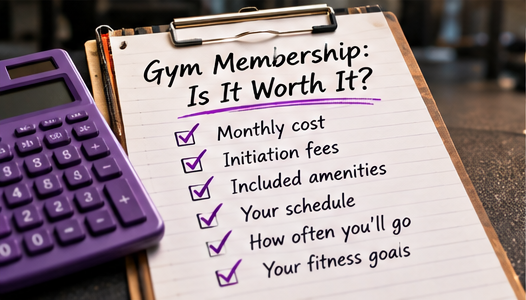
Before purchasing a membership, prospective members should examine the entire financial commitment rather than focusing exclusively on an advertised monthly price.
Important considerations include initiation fees, annual maintenance charges, cancellation policies, minimum contract periods, guest privileges, access to classes, personal training costs, and transportation expenses.
A membership advertised at an attractive introductory rate may become significantly more expensive when additional charges are included.
Calculating the Cost of Actually Using Your Membership
The value of a gym membership depends not only on its price but also on how frequently it is used.
Consider a hypothetical membership costing $40 per month.
| Monthly visits | Cost per workout |
| 4 visits | $10.00 |
| 8 visits | $5.00 |
| 12 visits | $3.33 |
| 16 visits | $2.50 |
A student who exercises four times monthly effectively pays $10 per visit, while someone attending 12 times pays approximately $3.33 per visit.
This comparison does not account for additional fees, but it demonstrates why consistency matters when evaluating financial value.
However, frequency is not the only consideration. A gym offering a swimming pool, group classes, professional guidance, or accessible equipment may provide meaningful value even to someone who attends less frequently.
The more important question is whether the facility supports the individual’s needs, preferences, and realistic schedule.
Choosing the Right Gym Instead of Just Any Gym
Selecting a fitness facility should involve more than comparing membership prices or choosing the closest location.
A gym might offer an impressive collection of equipment, but if its atmosphere feels intimidating, its hours conflict with work, or transportation requires an inconvenient commute, the membership may remain unused.
Before committing financially, prospective members should visit facilities, examine available equipment, observe cleanliness, and consider how comfortable they feel in the environment.
The time of day a person intends to exercise should play an especially important role.
For example, a student who works evenings may require early-morning access, while someone attending daytime classes may prefer a facility that remains open late.
A gym that feels spacious and comfortable during a quiet afternoon may become crowded and frustrating during peak evening hours.
Whenever possible, visiting during the intended workout period can provide a more realistic impression of the experience.
Other considerations include equipment availability, accessibility, locker rooms, staff assistance, group fitness programs, and whether the facility offers an introductory orientation.
A gym should complement a person’s lifestyle rather than require them to reorganize their entire life around it.
Personal Trainers: Guidance, Accountability, and Confidence
For individuals unfamiliar with exercise equipment or uncertain about developing an effective workout routine, professional guidance can make the gym environment more approachable.
Qualified personal trainers can assist with exercise technique, goal setting, program development, and safe progression.
The original article featured a Westchester-based personal trainer, identified here under the pseudonym Daniel Reyes to protect his identity, who discussed the importance of individualized instruction and flexible scheduling.
“You are the main focus during the session.”
Reyes emphasized that effective personal training involves planning sessions, documenting progress, adapting to individual circumstances, and helping clients find answers to their questions.
This personalized approach can be particularly valuable for beginners who feel intimidated by unfamiliar equipment or uncertain about performing exercises correctly.
When evaluating trainers, individuals should consider relevant education, practical experience, and recognized professional certifications.
Organizations mentioned in the original article include:
- National Strength and Conditioning Association (NSCA): Offers professional certifications associated with strength, conditioning, and personal training.
- American Council on Exercise (ACE): Provides fitness professional certifications and educational resources.
- National Academy of Sports Medicine (NASM): Offers personal training certifications and continuing education.
Certification alone does not guarantee that a trainer is appropriate for every individual. Communication, professionalism, experience, and the ability to accommodate personal goals are equally important.
Some facilities include an introductory training session with membership, while others charge separately. Independent trainers may also offer private sessions outside traditional gyms, depending on their arrangements and available facilities.
As Reyes observed in the original reporting, scheduling limitations can discourage gym attendance. Flexible appointments and individualized programs may help address this problem.
Nevertheless, personal training is an optional resource, not a requirement for becoming physically active.
Editorial note: Reyes’s statements are preserved from the previous article as original interview material. They should not be presented as newly obtained interviews.
Affordable Fitness Options in Westchester County
Westchester County has historically offered several commercial fitness options accessible to students and local residents.
The previous version of this article examined Crunch Fitness, Blink Fitness, and New York Sports Clubs, comparing their prices, facilities, and membership benefits.
Those examples remain useful for understanding how students can evaluate different membership models, although the specific prices and offers reflect the earlier reporting period.
Crunch Fitness
The original article identified Crunch Fitness locations in White Plains and Port Chester, describing a base membership priced at approximately $9.95 monthly.
It also discussed access to exercise equipment, group fitness activities, introductory personal training, and equipment orientations.
The broader lesson is that an entry-level membership can be appealing to students who need access to essential exercise equipment without paying for extensive amenities.
However, prospective members should confirm which classes, services, and training opportunities are actually included in the membership tier they select.
Blink Fitness
The earlier article identified Blink Fitness locations in White Plains and Yonkers, describing a membership costing approximately $20 monthly.
Reported benefits included guest privileges, an introductory personal training session, and a discount associated with Modell’s Sporting Goods.
These details represent historical membership offerings and should not be interpreted as currently available benefits.
Blink’s inclusion in the original article illustrates how budget-oriented fitness facilities have historically competed through relatively affordable pricing and introductory services.
New York Sports Clubs
The previous article also discussed New York Sports Clubs, including a location in Hartsdale.
It described a membership priced at approximately $39.99 monthly and referenced amenities such as group exercise, cycling, swimming, childcare, guest services, laundry services, personal training, children’s activities, and organized sports.
Such offerings illustrate why some individuals may prefer a more comprehensive fitness facility despite higher monthly expenses.
However, access to particular amenities can vary significantly by location, membership type, and current operating arrangements.
Finding the Best Value
Rather than treating historical prices as current recommendations, students should use these examples as a framework for comparing available facilities.
The most affordable membership is not automatically the best value, just as the most expensive facility is not necessarily the most effective.
A student who primarily wants access to weights and cardio equipment may benefit from a basic membership. Someone who enjoys swimming, structured classes, or supervised exercise may place greater value on a facility offering additional services.
The ideal choice depends on personal preferences, financial circumstances, transportation, accessibility, and consistency.
The best gym is not necessarily the one offering the most equipment. It is the one you can afford, feel comfortable attending, and realistically use.
When the Gym Is Not the Answer
Traditional gyms are not suitable for everyone.
Some individuals experience discomfort exercising around strangers. Others struggle with transportation, scheduling conflicts, financial limitations, physical restrictions, or simply dislike the atmosphere of commercial fitness facilities.
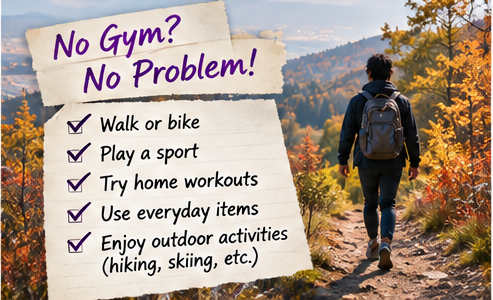
Fortunately, physical activity does not require a membership card.
The World Health Organization recognizes numerous forms of movement, including walking, cycling, recreational sports, and activities incorporated into everyday responsibilities.
For students attending Westchester Community College, organized athletics and recreational activities have historically provided alternatives to commercial gyms. Campus sports can also create opportunities for teamwork, social interaction, and a stronger sense of community.
Individuals who prefer exercising independently may discover that outdoor activities or home workouts offer greater convenience.
Daniel Reyes (a pseudonym) reflected on his own experience in the original article, explaining that after working out in several different gyms, he found smaller facilities and outdoor exercise particularly suitable for his preferences.
His observation reinforces an important principle: the most effective environment is often the one that feels personally sustainable.
Turning Everyday Activities Into Exercise
There are numerous ways to incorporate movement into daily life without purchasing expensive equipment.
Walking to work or class, taking the stairs, dancing at home, playing football in a park, hiking, cycling, or participating in recreational sports can all contribute to physical activity.
Seasonal activities, including skiing, can also provide opportunities for movement and recreation, although equipment, transportation, and participation costs should be considered.
Home workouts offer another alternative. Bodyweight exercises such as squats, modified push-ups, lunges, and other movements can provide opportunities to develop strength without purchasing specialized machines.
Common household items may sometimes serve as exercise equipment, provided they are stable, appropriate for the activity, and used safely.
For students who enjoy group activities, joining a recreational sports team may provide additional motivation and accountability.
Improving eating habits can complement physical activity, although dietary changes do not replace the benefits of regular movement. A balanced approach to nutrition, hydration, sleep, and exercise can support broader wellness goals.
The essential lesson is that exercise should remain accessible rather than becoming another source of financial or psychological pressure.
When Movement Becomes a Form of Emotional Release
There are moments when stress cannot be neatly organized into a schedule or resolved through better time management. Sometimes the burden is not a looming examination or an unpaid bill but the accumulation of emotions that have gone unspoken: disappointment, grief, frustration, uncertainty, loneliness, or the exhaustion of continuously appearing composed.
During these moments, the body can become an unwilling archive of everything the mind has struggled to process.
Shoulders tighten beneath responsibilities that seem impossible to set down. Restlessness persists long after the day’s obligations have ended. Thoughts repeat themselves, demanding answers that may not yet exist.
Physical movement cannot erase these experiences, nor should it be expected to.
Yet it can provide a different way of engaging with them.
There is something quietly meaningful about walking when the mind feels trapped, lifting a weight when responsibilities feel overwhelming, or allowing music to guide movement when words seem inadequate. Exercise offers an opportunity to redirect attention toward breathing, rhythm, physical sensation, and the immediate experience of being present.
For someone carrying emotional exhaustion, completing a workout may represent more than physical accomplishment. It may become a small declaration of personal agency.
The difficulty has not necessarily disappeared, but for a moment, it no longer occupies every available space.
This is particularly important because emotional well-being should never be reduced to a demand for constant positivity. A person can exercise regularly and still experience sadness, anxiety, grief, or psychological distress. Fitness does not invalidate difficult emotions, and physical strength does not make someone immune to emotional suffering.
Movement is one possible form of care, not a substitute for necessary mental health treatment or professional support.
Perhaps the deeper value of exercise lies not in transforming the body into something more acceptable but in learning to inhabit it with greater patience.
Sometimes strength is not measured by how much weight we can lift, but by how gently we learn to carry what life has placed upon us.
The Difference Between Self-Discipline and Self-Punishment
Modern fitness culture often celebrates relentless discipline, encouraging individuals to push beyond their limits and interpret rest as weakness.
Although commitment can support healthy habits, there is an important difference between developing consistency and using exercise as a form of self-punishment.
A student already overwhelmed by academic expectations does not need another standard of perfection.
Missing a workout should not become evidence of failure. Taking a rest day should not produce guilt. Physical activity should not become a punishment for eating, gaining weight, experiencing emotional difficulties, or failing to meet unrealistic expectations.
A sustainable routine allows room for changing circumstances.
During examination periods, a student might replace a lengthy workout with a short walk. Someone recovering from illness may require additional rest. A person experiencing emotional exhaustion may benefit more from gentle movement than an intense training session.
Listening to the body is not the opposite of discipline. It is part of practicing it responsibly.
Progress can also be measured in ways that have little to do with appearance: sleeping more comfortably, experiencing less restlessness, feeling stronger during everyday activities, maintaining a routine, or discovering an enjoyable outlet for stress.
The objective should be to cultivate a healthier relationship with oneself, not to create another arena for criticism.
Making Time for Yourself Without Falling Behind
One of the most common obstacles to regular exercise is the belief that there simply is not enough time.
For students balancing employment, family responsibilities, and academic expectations, this concern is understandable.
However, developing a routine does not necessarily require discovering additional hours. It may involve making small, intentional adjustments to existing habits.
A student might take a 15-minute walk between classes, exercise for 30 minutes before an evening shift, or reserve a portion of the weekend for recreational sports.
Another might combine physical activity with social interaction by attending a fitness class with friends or joining a campus sports program.
Scheduling exercise as a recurring appointment can also help establish consistency, particularly when the activity is enjoyable and realistic.
At the same time, individuals should avoid sacrificing essential sleep or recovery to satisfy arbitrary fitness goals.
The purpose of exercise is to support overall functioning, not undermine it.
A manageable routine should leave room for academic responsibilities, relationships, employment, rest, and personal interests.
A Healthier Definition of Success
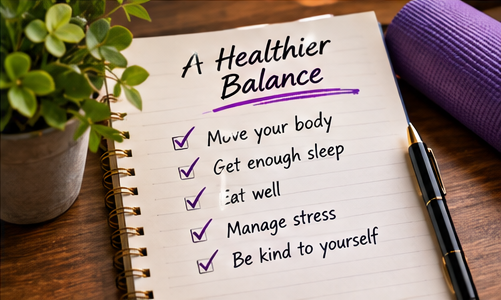
Academic achievement is often measured through grades, completed coursework, graduation milestones, and professional opportunities. Physical fitness is frequently measured through endurance, strength, weight, or appearance.
Yet neither form of success exists independently of emotional well-being.
A student can earn excellent grades while experiencing severe exhaustion. Someone can maintain an impressive exercise routine while struggling with self-criticism or emotional distress.
These realities remind us that success requires a broader definition.
Maintaining physical health, developing effective coping strategies, recognizing personal limitations, and creating space for rest are not distractions from achievement. They are important parts of sustaining it.
The relationship between physical activity, stress, and academic performance is complex, and research does not suggest that exercising more automatically produces better grades. Nevertheless, regular movement can support sleep, mental health, and physical functioning, all of which contribute to a healthier foundation for learning and daily responsibilities.
Ultimately, developing healthy habits during college is about preparing for more than graduation.
It is about learning how to live alongside responsibility without allowing responsibility to consume every part of life.
Final Reflections: Investing in Yourself Without Losing Yourself
A gym membership can be a worthwhile investment when it aligns with personal needs, financial circumstances, and realistic fitness goals. Access to exercise equipment, professional instruction, recreational programs, and a supportive environment may encourage individuals to develop consistent habits and improve their overall well-being.
However, the value of exercise cannot be measured exclusively through membership fees, attendance records, or physical transformations.
For some people, a commercial gym provides structure and motivation. For others, the most meaningful exercise takes place outdoors, at home, on a sports field, or during an ordinary walk through the neighborhood.
Neither approach is inherently superior.
What matters is developing a relationship with physical activity that supports rather than complicates daily life.
College students already face considerable pressure to perform academically, manage their finances, fulfill personal responsibilities, and prepare for uncertain futures. Exercise should offer an opportunity to relieve some of that pressure, not create additional expectations that become impossible to maintain.
Whether through three 30-minute sessions each week, a gradual progression toward recommended activity levels, or a more individualized routine, the first step is finding something enjoyable enough to continue.
Physical activity may improve sleep, support concentration, reduce feelings of anxiety, strengthen the body, and encourage healthier long-term habits. It can also create moments of emotional breathing room when life becomes overwhelming.
But perhaps its greatest lesson is that caring for ourselves does not have to begin with perfection.
Sometimes it begins with an ordinary decision: closing the textbook, stepping outside, taking a walk, or allowing ourselves thirty minutes in which productivity is no longer the only priority.
After all, the purpose of becoming stronger is not to carry an endless amount of stress. It is to build a life in which we no longer have to.
Works Cited
Centers for Disease Control and Prevention. “Adult Activity: An Overview.” CDC, 20 Dec. 2023, https://www.cdc.gov/physical-activity-basics/guidelines/adults.html.
Centers for Disease Control and Prevention. “Health Benefits of Physical Activity for Adults.” CDC, updated 10 Mar. 2026, https://www.cdc.gov/physical-activity-basics/health-benefits/adults.html.
Jimenez, Kiana. “Lower Your Stress Levels by Hitting the Gym.” Original unpublished draft supplied for revision, n.d.
Jimenez, Kiana. “The Cost of Gym Memberships: Do You Get Your Money’s Worth?” Earlier article, approximately 2017. Original document supplied for revision.
National Institute on Aging. “Mental Health Benefits of Exercise and Physical Activity.” National Institutes of Health, updated 5 June 2025, https://www.nia.nih.gov/health/infographics/mental-health-benefits-exercise-and-physical-activity.
U.S. Department of Health and Human Services. Physical Activity Guidelines for Americans. 2nd ed., 2018, https://www.cdc.gov/physical-activity/media/pdfs/Physical_Activity_Guidelines_2nd_edition.pdf.
World Health Organization. “Physical Activity.” WHO, 26 June 2024, https://www.who.int/news-room/fact-sheets/detail/physical-activity.
Wunsch, Kathrin, et al. “The Tridirectional Relationship among Physical Activity, Stress, and Academic Performance in University Students: A Systematic Review and Meta-Analysis.” International Journal of Environmental Research and Public Health, vol. 18, no. 2, 2021, article 739. https://doi.org/10.3390/ijerph18020739.
Original Reporting and Attribution Notes
The quotations attributed to Tricia Zelaya and to Daniel Reyes (a pseudonym used for the trainer interviewed in the original article) originate from the author’s earlier drafts. The original interview transcripts, publication dates, and independent records were not included in the supplied materials.
Historical gym membership prices, promotional benefits, locations, and descriptions of Westchester Community College sports opportunities were retained to preserve the original reporting. These details require current verification before being used as contemporary consumer recommendations.
The earlier draft also attributed observations about classroom concentration, participation, and information retention to American InterContinental University. Because the specific study or publication was not identified in the source document, that claim has been incorporated as a broader, qualified discussion of exercise and cognition rather than attributed to an unverified study.
Health information is provided for educational purposes and does not replace individualized medical advice. People with health conditions, injuries, or exercise limitations may benefit from consulting a qualified healthcare professional before beginning a new program.


Leave a Reply