,

Someone Had Folded the Sheet: Veil Tales Part 4

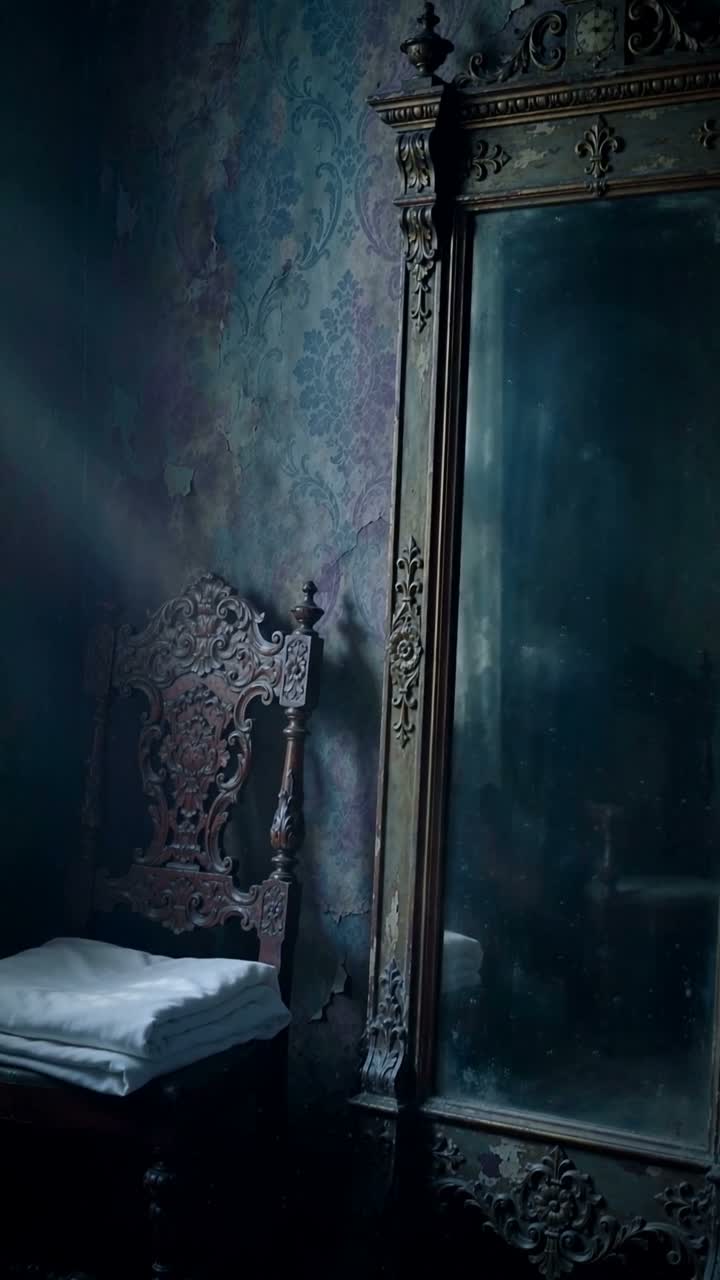
The footsteps stopped outside her door. And by morning, someone had folded the sheet. 🪞

Veil Tales Part 4 is here. She covers the mirror and waits for a knock that never comes. By morning the sheet is folded neat as laundry — and at dusk, the master of the house counts out her wages for fourteen nights.

Watch Part 4:

Transcript

I stayed by the door until the footsteps stopped on the landing. Nothing knocked. Nothing needed to. By morning, the sheet was folded like the house had done it for me — neat, patient, and a little too careful. I don’t know who folded it.

So I kept the door closed for fourteen nights, then I opened it just a crack. The mirror stayed covered. The house stayed quiet. And the wages were counted out in coins I’d never seen before.

Written & created by Kiana Jimenez · Poetic Bipolar Mind. Part 4 of Veil Tales — a series in short reels.
Discover more from Poetic Bipolar Mind

Subscribe to get the latest posts sent to your email.

Leave a Reply

Your email address will not be published. Required fields are marked *


Discover more from Poetic Bipolar Mind

Subscribe to get the latest posts sent to your email.

  • The Real New York: Biggie’s ‘Juicy’ Explained

    The Real New York: Biggie’s ‘Juicy’ Explained

    Beyond skyscrapers and tourist landmarks lies another New York. Through Biggie’s ‘Juicy,’ this piece explores struggle, ambition, success, and the dream of making it.

  • The Meaning of Life in Waiting for Godot

    The Meaning of Life in Waiting for Godot

    The Meaning of Life in Waiting for Godot “Nothing happens, nobody comes, nobody goes, it’s awful.” — Samuel Beckett Existentialism and Meaning The main underlying theme in the play is existentialism and the human struggle to create meaning in what seems to be a meaningless life. Existentialism is a philosophy that the idea of religion…

  • Faith as a Pseudo-Science

    Can faith stand trial in a courtroom, or survive the cold eye of a laboratory? An essay on belief without evidence, and why justice and religion were never meant to share the same bench.