,

Someone Was Already Keeping Her Place: “The Room Below” — Veil Tales Part 2

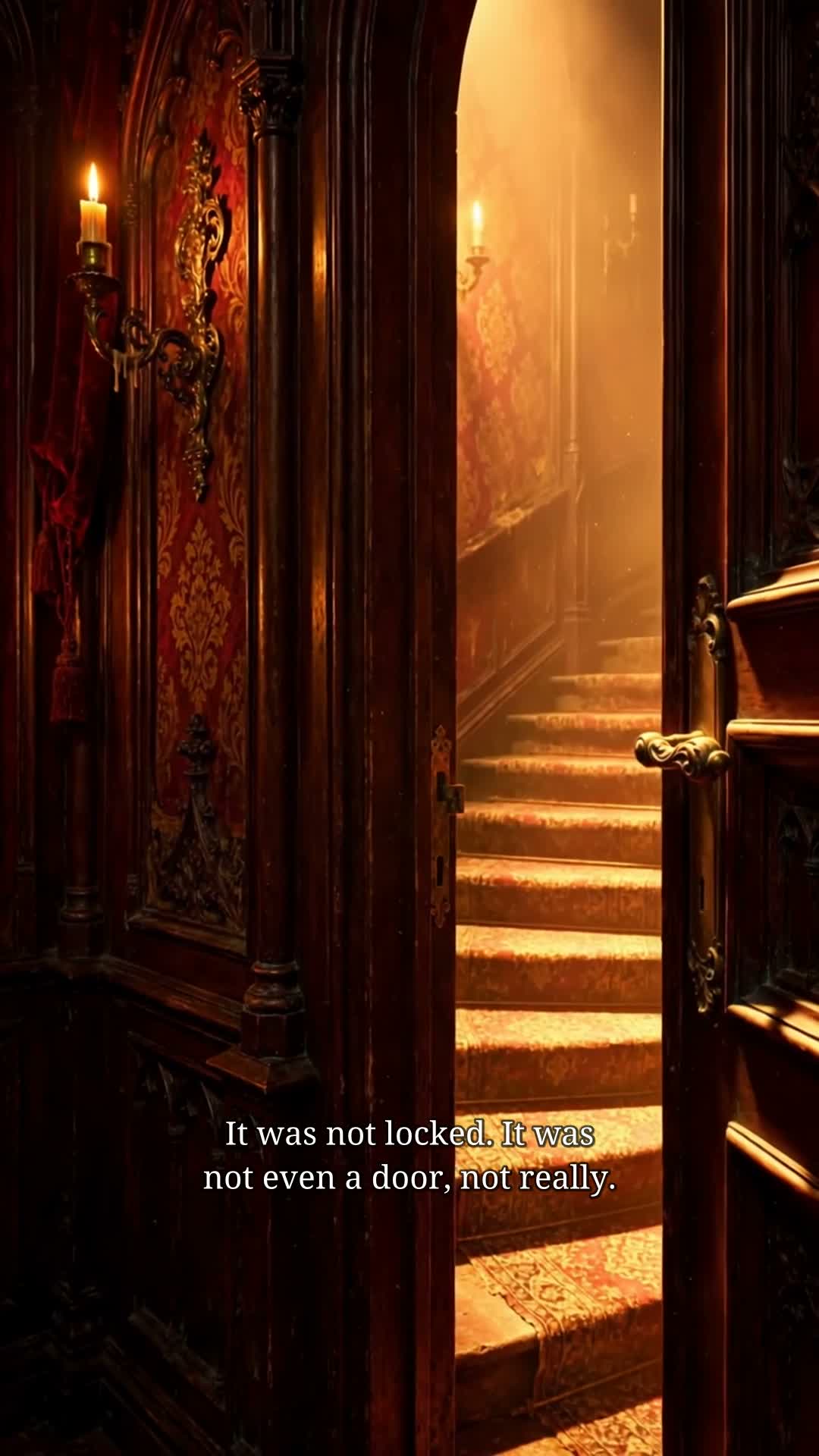
She opened the door. And downstairs, someone was already keeping her place. 🗝️

Veil Tales Part 2, “The Room Below,” is here. She goes down the stairs that shouldn’t exist and finds a room she already knew — her own room, the bed made, the candle lit, and someone sitting in the chair by the window, wearing her face.

Watch Part 2:

Transcript

Tomorrow came. I put my hand on the handle. It was not locked. It was not even a door, not really. Behind it, a staircase went down where no staircase should be, into dark that smelled like rain and old paper. I told myself I would only look. I counted my steps. One. Two. Three. The stairs kept going. At the bottom stood a room I already knew. My own room. The bed made. The candle lit. And in the chair by the window, someone was sitting, wearing my face. She did not look up. She said, without turning, You took your time. I have been keeping your place. I ran. I do not know if I ran up or down. Behind me, the door closed. And this morning, I looked in the mirror. She blinked first.

Written & created by Kiana Jimenez · Poetic Bipolar Mind. A new part arrives every Friday — follow @poeticbipolarmind so you don’t miss it.

Discover more from Poetic Bipolar Mind

Subscribe to get the latest posts sent to your email.

Leave a Reply

Your email address will not be published. Required fields are marked *


Discover more from Poetic Bipolar Mind

Subscribe to get the latest posts sent to your email.

  • Rage, Acceptance, and the Light

    Dylan Thomas’s Do Not Go Gentle into That Good Night demands defiance against death, yet it raises a paradox: is it better to rage or to accept? This reflection explores Thomas’s urgency, the ethics of resistance, and how Poetic Bipolar Mind embodies both rebellion and peace in the face of mortality.

  • Binds

    Binds

    Ice burns through the chest, freedom becomes a cruel illusion, and binds linger even when the shackles are gone. Binds captures the ache of emptiness, the weight of choices, and the haunting question of whether escape truly exists. Yet, amidst despair, hope flickers faintly in the mist.

  • My Door’s Key

    “My Door’s Key” opens the locked door to depression’s hidden battles. With raw honesty and vivid imagery, it reveals the weight of mental illness, the silence behind the smile, and the courage it takes to seek healing. A poem of pain, vulnerability, and the hope for connection.